Category: Seventies Folk Music

  • Les Humphries Singers – “Mexico” (“The Battle of New Orleans”)

    The Les Humphries Singers were better known in Europe than the USA, but the one song of theirs that sticks in my mind is their 1972 hit “Mexico”.

    It is actually an adaptation of the song “The Battle of New Orleans”, written by musician and school teacher Jimmy Driftwood (James Corbitt Morris) in 1936 to get his pupils interested in history, and popularised in 1959 by Johnny Horton.

    There have been many versions of the original country-folk song, using the original title, but they appear to be have been mainly known in the United States.

    The German-based multinational ensemble Les Humphries Singers, with their English leader Les Humphries, popularised the story, the lyrics and the melody internationally – apparently even going so far as to violate copyright when they credited the song to Humphries.

    In any case, this is the only version I had ever heard until researching this just now.

    I never knew the whole lyrics, just scraps of them – like “the British kept a comin” and “down the Mississipi to the Gulf of Mexico… Mexico… Mexico…”.

    Definitely rousing stuff, especially when sung by a large group of people.

    So here are the Les Humphries Singers singing “Mexico” in 1972:

    And by way of contrast, this is Jimmy Driftwood singing the original “The Battle Of New Orleans”:

    Actually, Jimmy Driftwood (sometimes Jimmie Driftwood), who wrote over 6,000 folk songs, is a pretty interesting character worth taking a closer look at – perhaps more interesting than the Les Humphries Singers…

    Paul

  • Ralph McTell – “Streets Of London”

    Cover of 1974 Ralph McTell single "Streets Of London"

    Although initially written and released on his second album in 1969, “Streets Of London” by Ralph McTell came out as a single in the UK in 1974, having earlier been successfully launched as a single in the Netherlands.

    I remember when I flew into Britain for the first time a week before Christmas in 1977, when I was not quite 20, this song was in my head as we circled over London before landing – and as I descended the steps from the plane onto the tarmac (maybe it was concrete, who cares…).

    And again the next morning as I leaned out the hotel window in the dark before the sun came up (behind clouds, I believe, but I didn’t care – I had returned to the land of my parents that I had dreamed of since childhood).

    It came to mind tonight at dinner in a hotel in Bristol with my father, as he talked about having a cup of tea for a pound at London’s Victoria Station.

    For that made me think of the old man in “Streets Of London”, and the woman with her carrier bags.

    I had come across them at Victoria Station on a dreary Sunday in late 1980 as I waited in the station cafe for a train to the ferry that would take me back to the Continent.

    His name was Mr Golden.

    He had nowhere to go – he lived with his son, who had thrown him out, and had no money until his next pension payment.

    I bought him a cup of tea – for a pound. And I kept him company as he passed away the time waiting for Monday.

    It makes me quite teary eyed now just thinking about it.

    As we sat there, the woman from the song with her carrier bags came by.

    The whole situation was so surreal, and the irony is that I have just read that Ralph McTell actually based the stories in “Streets Of London” on characters in Paris, although he apparently drew on his hitchhiking and busking experiences in that city as well as London and elsewhere in Europe.

    Which reminds me that I also used to see them in Frankfurt when I lived and worked there, the “old girl” in particular, with her carrier bags.

    “Streets Of London” went to Number 2 on the UK singles chart over Christmas in 1974, at one point selling 90,000 copies a day.

    Later I learned to play it on the guitar.

    Although meanwhile covered over 200 times, the song became so closely identified with Ralph McTell that there was a sketch on British comedy show Big Train in which he plays “Streets Of London” and then attempts to perform “a new song”.

    After expressions of shock and disbelief in the audience, who cannot conceive that Ralph McTell could play any other song, they force him (or rather the actor playing him) to segue into “Streets Of London” yet again.

    So here it is, Ralph McTell with “Streets Of London”:

    Does that take you in your mind to the streets of London?

    Paul

  • Lobo – “Me And You And A Dog Named Boo”, “How Can I Tell Her About You”, “I’d Love You to Want Me”, “Stoney”, “Hope You’re Proud Of Me Girl”, “It Sure Took a Long, Long Time”, “Don’t Expect Me To Be Your Friend”, “Standing At The End Of The Line” and “Goodbye Is Just Another Word”

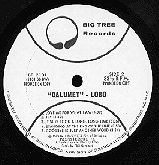
    Lobo album "Calumet" on Big Tree Records

    When I was about 16, I used to listen to Lobo over and over again. Songs like his big hit “Me And You And A Dog Named Boo”; “How Can I Tell Her About You” and “I’d Love You to Want Me”. Or “Stoney”, “Hope You’re Proud Of Me Girl”, “It Sure Took a Long, Long Time”, “Don’t Expect Me To Be Your Friend”, “Standing At The End Of The Line” and “Goodbye Is Just Another Word”.

    Seems he had one hit after another in the early Seventies, and as I was looking through his songs, one after another came back to me.

    The words, and the melodies.

    I’m not going to comment on them individually, just let you listen and enjoy them one after another.

    This was his first big hit, in 1971, “Me And You And A Dog Named Boo”:

    “I’d Love You to Want Me”went to No. 2 on the U.S. singles charts in 1972:

    “Don’t Expect Me To Be Your Friend” reached the Top Ten that year:

    “It Sure Took a Long, Long Time” made it to the Top 30 the same year:

    And in 1973 “How Can I Tell Her About You” did too:

    In 1974 “Standing At The End Of The Line” peaked at 37:

    The next three songs were album tracks –

    “Stoney”:

    “Hope You’re Proud Of Me Girl”:

    “Goodbye Is Just Another Word”:

    OK, so I did coment on (some of) them after all…

    I must admit I was surprised how much I still like these songs.

    Hope you do too.

    Paul

  • Don McLean – “American Pie”, “Vincent (Starry, Starry Night)”, “Crying”, “Since I Don’t Have You” and “Castles In The Air”

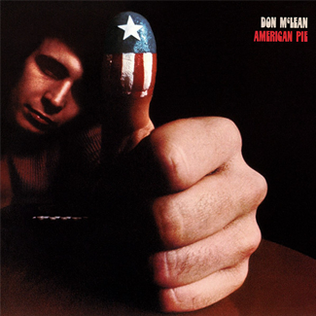
    Cover of Don McLean album "American Pie"

    I can’t remember a time without Don Mclean singing “American Pie” and Vincent”, and yet it was only 1971 when the former was released and 1972 when it topped the charts for weeks on end.

    Like the phrase it coined, “The day the music died”, it has been a part of our culture ever since.

    Ladies and gentlemen – “American Pie”, the studio version:

    And “American Pie” live in 1972:

    Much quieter and more reflective, yet equally memorable, is Don McLean’s tribute to 19th century Dutch painter Vincent van Gogh, “Vincent (Starry, Starry Night)”:

    Towards the end of the decade, in 1978, Don McLean released a cover of the Roy Orbison song “Crying”, which reached Number 1 in the UK two years later and No. 5 in the US:

    Shortly after, McLean, who is also known for his covers of great artists, presented his version of Fifties classic “Since I Don’t Have You”:

    Finally, here’s “Castles In The Air”, with pictures of the Brighton Pavilion, which remind me of pleasant days spent with family last summer in my parents’ home town on the south coast of England:

    Back to the roots, so to speak.

    Paul

  • Gordon Lightfoot – “If You Could Read My Mind”, “Sundown” and “The Wreck Of The Edmund Fitzgerald”

    Cover of Gordon Lightfoot single "The Wreck Of The Edmund Fitzgerald"

    Three Seventies songs from Canadian folk singer Gordon Lightfoot stick in my mind – “If You Could Read My Mind”, “Sundown” and “The Wreck Of The Edmund Fitzgerald”.

    “If You Could Read My Mind”, written after his divorce, reached No. 1 in Canada and the 5th spot in the USA. Here is the original:

    And here is “If You Could Read My Mind” sung live in Chicago in 1979:

    “Sundown”, sung here live in 1974, went to Number 1 on both the Canadian and U.S. singles charts in that year:

    Finally, “The Wreck Of The Edmund Fitzgerald”, written after an incident on the Great Lakes on November 10, 1975, reached the top spot in Canada and peaked at No. 2 in America in 1976. This video commemorates every single one of the 29 crew members lost on the ship:

    Here Gordon Lightfoot sings the ballad live in 1979:

    There is something timeless about the music of Gordon Lightfoot.

    Take your time to enjoy it…

    Paul

1770099630