Category: Seventies Soft Music

  • Lobo – “Me And You And A Dog Named Boo”, “How Can I Tell Her About You”, “I’d Love You to Want Me”, “Stoney”, “Hope You’re Proud Of Me Girl”, “It Sure Took a Long, Long Time”, “Don’t Expect Me To Be Your Friend”, “Standing At The End Of The Line” and “Goodbye Is Just Another Word”

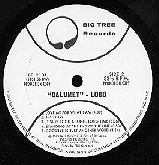
    Lobo album "Calumet" on Big Tree Records

    When I was about 16, I used to listen to Lobo over and over again. Songs like his big hit “Me And You And A Dog Named Boo”; “How Can I Tell Her About You” and “I’d Love You to Want Me”. Or “Stoney”, “Hope You’re Proud Of Me Girl”, “It Sure Took a Long, Long Time”, “Don’t Expect Me To Be Your Friend”, “Standing At The End Of The Line” and “Goodbye Is Just Another Word”.

    Seems he had one hit after another in the early Seventies, and as I was looking through his songs, one after another came back to me.

    The words, and the melodies.

    I’m not going to comment on them individually, just let you listen and enjoy them one after another.

    This was his first big hit, in 1971, “Me And You And A Dog Named Boo”:

    “I’d Love You to Want Me”went to No. 2 on the U.S. singles charts in 1972:

    “Don’t Expect Me To Be Your Friend” reached the Top Ten that year:

    “It Sure Took a Long, Long Time” made it to the Top 30 the same year:

    And in 1973 “How Can I Tell Her About You” did too:

    In 1974 “Standing At The End Of The Line” peaked at 37:

    The next three songs were album tracks –

    “Stoney”:

    “Hope You’re Proud Of Me Girl”:

    “Goodbye Is Just Another Word”:

    OK, so I did coment on (some of) them after all…

    I must admit I was surprised how much I still like these songs.

    Hope you do too.

    Paul
  • Don McLean – “American Pie”, “Vincent (Starry, Starry Night)”, “Crying”, “Since I Don’t Have You” and “Castles In The Air”

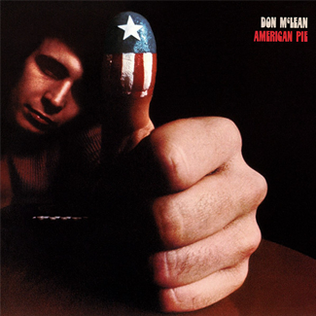
    Cover of Don McLean album "American Pie"

    I can’t remember a time without Don Mclean singing “American Pie” and Vincent”, and yet it was only 1971 when the former was released and 1972 when it topped the charts for weeks on end.

    Like the phrase it coined, “The day the music died”, it has been a part of our culture ever since.

    Ladies and gentlemen – “American Pie”, the studio version:

    And “American Pie” live in 1972:

    Much quieter and more reflective, yet equally memorable, is Don McLean’s tribute to 19th century Dutch painter Vincent van Gogh, “Vincent (Starry, Starry Night)”:

    Towards the end of the decade, in 1978, Don McLean released a cover of the Roy Orbison song “Crying”, which reached Number 1 in the UK two years later and No. 5 in the US:

    Shortly after, McLean, who is also known for his covers of great artists, presented his version of Fifties classic “Since I Don’t Have You”:

    Finally, here’s “Castles In The Air”, with pictures of the Brighton Pavilion, which remind me of pleasant days spent with family last summer in my parents’ home town on the south coast of England:

    Back to the roots, so to speak.

    Paul

  • Gordon Lightfoot – “If You Could Read My Mind”, “Sundown” and “The Wreck Of The Edmund Fitzgerald”

    Cover of Gordon Lightfoot single "The Wreck Of The Edmund Fitzgerald"

    Three Seventies songs from Canadian folk singer Gordon Lightfoot stick in my mind – “If You Could Read My Mind”, “Sundown” and “The Wreck Of The Edmund Fitzgerald”.

    “If You Could Read My Mind”, written after his divorce, reached No. 1 in Canada and the 5th spot in the USA. Here is the original:

    And here is “If You Could Read My Mind” sung live in Chicago in 1979:

    “Sundown”, sung here live in 1974, went to Number 1 on both the Canadian and U.S. singles charts in that year:

    Finally, “The Wreck Of The Edmund Fitzgerald”, written after an incident on the Great Lakes on November 10, 1975, reached the top spot in Canada and peaked at No. 2 in America in 1976. This video commemorates every single one of the 29 crew members lost on the ship:

    Here Gordon Lightfoot sings the ballad live in 1979:

    There is something timeless about the music of Gordon Lightfoot.

    Take your time to enjoy it…

    Paul

  • Linda Ronstadt – “When Will I Be Loved”, “You’re No Good”, “Blue Bayou”, “It Doesn’t Matter Any More” and “First Cut Is The Deepest”

    Linda Ronstadt single cover "Blue Bayou"
    Linda Ronstadt was a name you heard a lot in the Seventies, her biggest hits included “When Will I Be Loved”, “You’re No Good” and “Blue Bayou”.

    By coincidence, these are just about the only ones of her many songs I can recall…

    I found a couple more that I recognise though, but I can’t say now whether it’s just the songs themselves that are familiar or Linda Ronstadt’s versions of them!

    Songs like “It Doesn’t Matter Any More” and the Cat Stevens number “First Cut Is The Deepest”, best known in the Rod Stewart version.

    Whatever Linda Ronstadt sings, with her powerful voice she certainly makes it her own.

    Here are some of those songs –

    “When Will I Be Loved”, live in 1977:

    From the same concert in Atlanta, Georgia, the quieter track “It Doesn’t Matter Any More”, featuring Linda Ronstadt accompanying herself on acoustic guitar:

    “You’re No Good”, on the Midnight Special (with an introduction by Jose Feliciano):

    This is probably the Linda Ronstadt track I like the best, once again from that 1977 concert in Atlanta, “Blue Bayou”:

    And finally, “First Cut Is The Deepest”:

    “I’m going back in time…”

    Paul

  • Chicago – “If You Leave Me Now”, “Hard To Say I’m Sorry/Get Away” and “Beginnings”

    Cover of 1976 Chicago single "If You Leave Me Now"
    There have been over 100 versions of the Chicago song “If You Leave Me Now”, but the classic was and is the original, which went to Number 1 in the USA (both singles and album charts, the album was Chicago X), Australia and in the UK, among others, in 1976.

    Chicago had many hits right through the Seventies and beyond, but “If You Leave Me Now” is the one that stands out for me:

    The next Chicago track to reach No. 1 (and the first since 1978 to reach the Top 50) was “Hard To Say I’m Sorry”, which is actually from 1982. On the album it segued into “Get Away”, as it does in this live version recorded in Dortmund, Germany:

    And this is what Chicago, then still known as The Chicago Transit Authority, sounded like in the early days, still very jazz oriented with lots of brass, “Beginnings”, released in October 1969:

    Not everyone’s cup of tea, and it didn’t chart, but quite pleasant nonetheless.

    Paul

1765600658