It was the age of miniskirts and hot pants when Scottish band Middle Of The Road with lead singer Sally Carr had a string of pop hits in 1971 and 1972, including “Chirpy Chirpy Cheep Cheep”, “Tweedle Dee, Tweedle Dum”, “Soley Soley” and “Samson and Delilah”.
For some reason the lines
“Last night I heard my mama singing a song
Woke up this morning and my mama was gone”
came to mind, and the music was in my head.
I then discovered a few other songs I remember from the time were also by Middle Of The Road, so here they are…
“Chirpy Chirpy Cheep Cheep” was a number one hit in the UK in 1971, here it is on Top Of The Pops:
Later that year, “Tweedle Dee, Tweedle Dum” reached number 2 in the UK:
Also in 1971, “Soley Soley” made it to No. 5 in the UK:
In 1972 “Samson and Delilah” only got to No. 26 in the UK, but it was No. 2 in Germany and No. 1 in the Netherlands:
Watching these old clips, there’s a lot to be said for hot pants and miniskirts…
While I wasn’t really a follower of U.S. Southern rock band Lynyrd Skynyrd at the time, I became very familiar with three of their tracks from the early Seventies, namely “Gimme Three Steps”, Free Bird” and “Sweet Alabama”.
This was largely through working with a band in Germany called Nuthin’ Fancy who were big fans of Lynyrd Skynyrd – in fact I have only just learned that they took their name from their idols’ third album…
“Gimme Three Steps” didn’t chart when it was released as a single in 1973, but the debut album it was on (“Lynyrd Skynyrd (pronounced ‘lĕh-‘nérd ‘skin-‘nérd)”) went to No. 1 – here it is:
Also from that 1973 album was what was to become Lynyrd Skynyrd’s signature song, “Free Bird”, which reached No. 19 as a single in 1974, making it their second Top 40 hit.
After the tragic plane crash in October 1977 in which several band members, including singer Ronnie Van Zantz, were killed, “Free Bird” was only played as an instrumental for many years.
This is “Free Bird”, live in July 1977, just months before that defining event (takes a little while to get going, but it’s worth it):
Previously, Lynyrd Skynyrd had their first chart hit, at No. 8, with “Sweet Home Alabama” from their second album, “Second Helping”.
The response to Neil Young’s songs “Southern Man” and “Alabama” was somewhat controversial because of lines about the state’s governor, which some took to be an endorsement of his segregationalist views, an endorsement put down to a misunderstanding and denied by band members.
“Sweet Home Alabama” is another of those songs that has meanwhile become a rock anthem:
I think “Sweet Home Alabama” is one Lynyrd Skynyrd song that I did actually hear back in the Seventies already, and it’s definitely one you remember.
When did you first hear it?
Paul
P.S. Lynyrd Skynyrd is really hard to spell right consistently!!
Last night by chance I came across an old favourite from New Zealand in the Seventies: Mother Goose singing their slightly ludicrous “Baked Beans” – which just goes to show you can make a rock song outof anything!
I had forgotten about Mother Goose, but they actually did pretty well for themselves, having coming up with the idea of mocking themselves by dressing up ridiculously when they performed in the South Island city of Dunedin and then nationally.
The more they made fun of themselves, the more popular they became: they broke attendance records accross Australasia, and their debut album “Stuffed” was Mushroom Records’ fastest selling album.
When they went to Australia, what later became top bands queued up to be their support acts, like Midnight Oil, Cold Chisel, Men At Work and The Angels.
Their first national tour was with international, i.e. British, band Supercharge – this particularly got my attention because a flatmate of mine in Bamberg, Germany in the early Eighties was later in a blues band that had a number of gigs with Supercharge, including when they toured with Chuck Berry.
Mother Goose moved to the USA in 1978 for a year and did very well, with members of Kiss and Devo becoming fans of their shows in New York.
After returning to Australia the band continued to attract huge crowds there and also on tours in Canada, eventually breaking up in 1984, with a reunion in 2007 as part of a celebration of 30 years of the “Dunedin Sound”.
Here now is the “Baked Beans” video, which was so well received it even got shown on TV between prime time programmes in Australia and New Zealand:
Just to show they didn’t just do humour, here is “This Is The Life”, live in Dunedin, New Zealand:
Glad I chanced on this one again, hope you enjoyed it too. 🙂
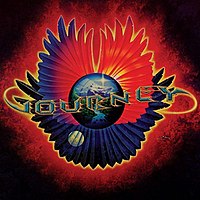
San Fancisco band Journey were very successful from the late Seventies on into the Eighties, with songs like “Wheel in the Sky”, “Lights”, “Lovin,’ Touchin,’ Squeezin’”, “Any Way You Want It”, “Who’s Crying Now” and “Don’t Stop Believin’”.
I remember that in the part of southern Germany where I lived in the early 1980s (Franconia, North Bavaria) you used to hear a lot of the 1978 release “Wheel In The Sky”, both on American Forces Network AFN (there were a lot of GIs stationed in the area back then) as well as on German stations and just generally at parties, dances and concerts.
This is what “Wheel in the Sky” sounded like live when it first came out:
Here’s “Lights”, live in Chicago in 1978:
And “Lovin,’ Touchin,’ Squeezin’” live on the Midnight Special in 1979 (nice and bluesy!):
The next few songs are actually from the early years of the following decade, but the sound is still pretty much as it was in the Seventies. As you can see, all of these performances are live.
And now for something completely different… In 1972 Vicky Leandros had a European hit with “Après Toi” (After You), and I went on my first overseas trip from New Zealand, to the French Pacific colony of New Caledonia.
All the time we were in Nouméa, its capital, we heard the song “Après Toi” again and again, and it came to be the theme song of our two week visit – and always reminds me of that time.
Of course I bought the single (see above), although unlike New Zealand singles it had a huge hole in the middle, so I had to find an adapter to be able to play it!
The reason the song was so big in Europe was she had just won the Eurovision song contest with it, on behalf of Luxembourg.
This is “Après Toi”, in French:
And here are the French lyrics:
Tu t’en vas, l’amour a pour toi le sourire d’une autre,
Je voudrais, mais ne peux t’en vouloir
Désormais, tu vas m’oublier
Ce n’est pas de ta faute, et pourtant tu dois savoir
Qu’après toi, je ne pourrai plus vivre,
Non plus vivre qu’en souvenir de toi
Après toi, j’aurai les yeux humides,
Les mains vides, le coeur sans joie
Avec toi, j’avais appris a rire,
Et mes rires ne viennent que par toi
Après toi, je ne serai que l’ombre
De ton ombre, après toi
Même un jour, si je fais ma vie
Si je tiens la promesse qui unit deux êtres pour toujours
Àpres toi, je pourrai peut-être donner de ma tendresse
Mais plus rien de mon amour
Après toi, je ne pourrai plus vivre,
Non plus vivre qu’en souvenir de toi
Après toi, j’aurai les yeux humides,
Les mains vides, le coeur sans joie
Avec toi, j’avais appris a rire,
Et mes rires ne viennent que par toi
Après toi, je ne serai que l’ombre
De ton ombre, après toi
Vicky Leandros is actually Greek, and having spent much of her early life in Germany with her musician father (Leandros is actually his first name), Vicky Leandros sings in numerous languages and apparently she sang “Après Toi” in seven languages.
The English version, which reached No. 2 in the UK, is called “Come What May”:
Think I prefer the French version… for the words and the memories…
Paul
P.S. Vicky Leandros earlier came 4th at Eurovision in 1967 with “L’amour est bleu”, also known as “Love is blue”, which became very popular in the late Sixties in the version by French orchestra leader Paul Mauriat.